
Can dogs have ibuprofen or Tylenol?
The short answer
No
Never give your dog ibuprofen (Advil, Motrin), naproxen (Aleve), or Tylenol (acetaminophen). Dogs process these drugs differently from people, and a dose that's safe for you can cause stomach ulcers, kidney failure, or liver damage in a dog. For a small dog, just a tablet or two can be dangerous.
Did your dog just eat a pill?
Call your vet or a pet poison line now, even if your dog seems fine. Signs can take hours or days to appear. Have the packet ready, and don't make your dog vomit unless a vet tells you to.
Call your vet, an emergency vet, or a 24/7 pet poison line:
US numbers. A consultation fee may apply. Don't try to make your dog vomit unless a vet tells you to.
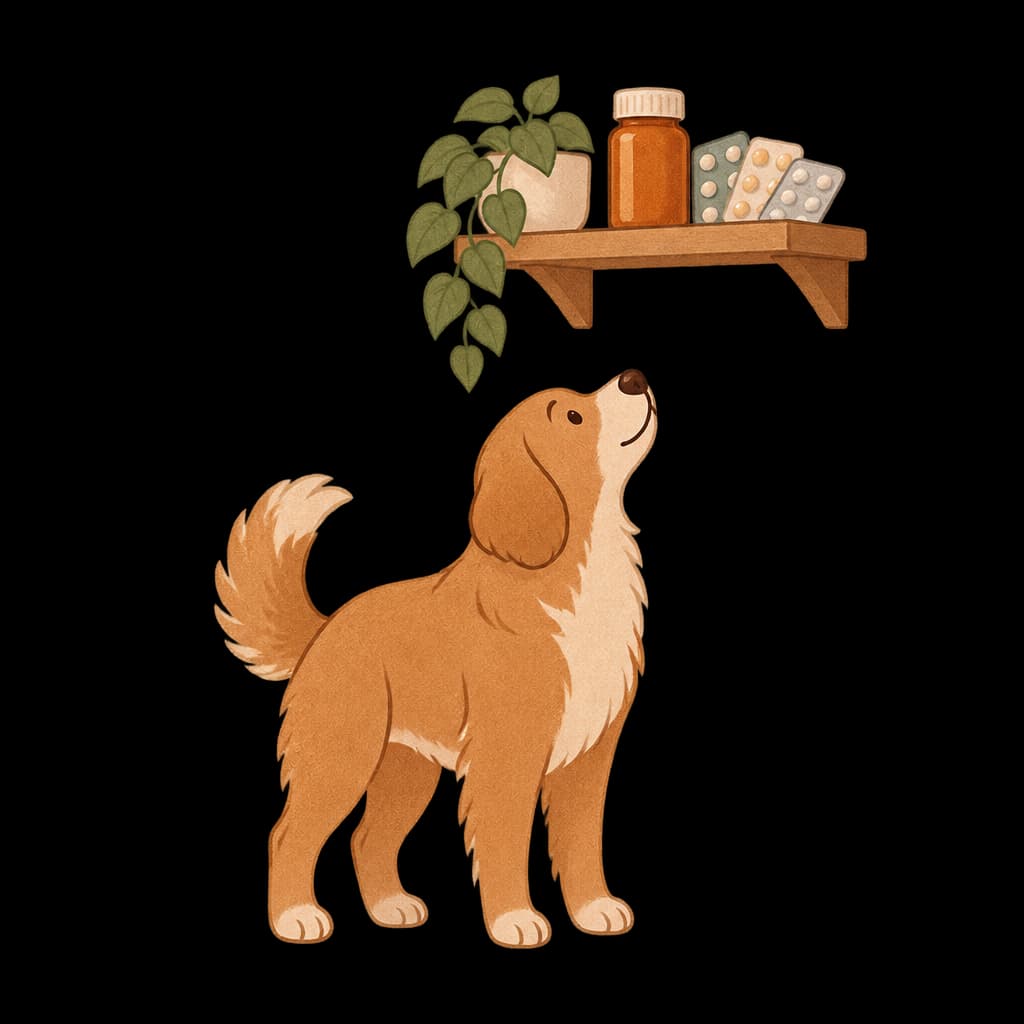
Why human pain medicine is dangerous for dogs
Ibuprofen and naproxen belong to a group of drugs called NSAIDs (nonsteroidal anti-inflammatory drugs). The FDA explains that human NSAIDs can last longer in a dog's body, are processed differently, and can reach higher levels in the blood than in people. That makes the stomach lining and kidneys especially vulnerable.
Acetaminophen (Tylenol) works differently, but it is just as risky: it can damage a dog's liver and red blood cells. Pills are also easy to get wrong: a dropped tablet, a chewed-up bottle, or a well-meant dose can all poison a dog.
How dangerous is each medicine?
Ibuprofen (Advil, Motrin)
Stomach ulcers and bleeding, then kidney failure at higher doses. For a 10 lb dog, 2 or 3 regular tablets can cause vomiting and stomach pain, and about 4 can reach the dose linked with kidney failure.
Naproxen (Aleve)
Even more dangerous to dogs than ibuprofen, because it lasts so long in their bodies. A single tablet can cause bleeding ulcers in a small dog.
Acetaminophen (Tylenol)
Damages the liver and red blood cells, so the body can't carry oxygen properly. One extra-strength tablet is enough to make a 10 lb dog sick.
Aspirin
Can cause stomach ulcers and bleeding. Vets occasionally prescribe it, but only at a specific dose and never alongside other pain medicines. Don't give it without your vet's advice.
Signs of pain medicine poisoning in dogs
- Vomiting (sometimes with blood) or diarrhea
- Black, tarry, or bloody stools
- Not eating, belly pain, or low energy
- Drinking and peeing more, or less, than usual (a sign of kidney trouble)
- Yellow gums or eyes, swelling of the face or paws, or brown gums (with Tylenol)
- Wobbliness, seizures, or collapse with very large doses
Don't wait for signs. Treatment works best in the first few hours, before the drug is absorbed. Call your vet or a pet poison line as soon as you know or suspect your dog swallowed a pill.
What can I give my dog for pain?
Only what your vet prescribes. Vets have NSAIDs made for dogs, like carprofen, meloxicam, and grapiprant, plus other pain medicines, and they choose the dose for your dog's weight and health. The FDA advises asking for blood tests before long-term use, and never giving two NSAIDs together, or an NSAID with a steroid.
Never give your dog a medicine prescribed for another pet, either. Cat and dog doses are very different. If your dog seems sore and it's out of hours, call an emergency vet rather than reaching for the medicine cabinet.
Cats are even more sensitive
The FDA states that acetaminophen is fatal to cats, because they lack the liver enzymes to break it down. A single regular-strength Tylenol tablet is well above the dose that poisons an average cat. Cats are also poisoned by ibuprofen at about half the dose that harms a dog. Never give a cat any human pain medicine.
Keeping pills away from your dog
- Keep all medicines in a closed cabinet, not on counters, nightstands, or in handbags.
- Take pills over a table or sink so a dropped tablet doesn't land on the floor.
- Pill bottles are chew toys to many dogs. Child-proof caps aren't dog-proof.
- Keep your pet's medicines separate from yours so they can't be mixed up.
Worried about something your dog ate? See our list of safe and dangerous foods, or check a chocolate or grape scare with the toxicity checker.
Frequently asked questions
Can I give my dog ibuprofen for pain?
No. Ibuprofen (Advil, Motrin) can cause stomach ulcers and kidney failure in dogs. For a 10 lb dog, two or three regular tablets can cause vomiting and stomach pain. Ask your vet for a pain medicine made for dogs.
Can dogs have Tylenol?
Not unless a vet prescribes it. Acetaminophen (Tylenol) can damage a dog's liver and red blood cells, and one extra-strength tablet can make a small dog sick. It is deadly to cats.
My dog ate one ibuprofen. What should I do?
Call your vet or a pet poison line right away, even if your dog seems fine. Have the packet ready so you can say the strength and how many are missing. Don't make your dog vomit unless a vet tells you to.
How long after eating ibuprofen will a dog show symptoms?
Vomiting and stomach upset can start within hours, but ulcers and kidney damage may take a few days to show. That's why vets want to hear from you straight away, not when signs appear.
Can dogs have aspirin?
Only if your vet prescribes it, at the dose they set. Aspirin can cause stomach ulcers and bleeding, and it must never be combined with other NSAIDs or steroids.
What human pain medicine is safe for dogs?
None should be given without your vet's advice. Vets use pain medicines made for dogs, like carprofen or meloxicam, at doses that suit your dog's weight and health.
Sources
- Merck Veterinary Manual, Professional version. Toxicities from Human Drugs: Analgesics (acetaminophen, aspirin, ibuprofen, naproxen).
- U.S. Food and Drug Administration. Get the Facts about Pain Relievers for Pets.
Sources last checked: . How we calculate
More tools for your dog

Dog Age Calculator
Convert dog years to human years by size and breed, and see your dog's life stage.

Puppy Vaccination Schedule
Every puppy shot and vet visit, with your dates and calendar reminders.
Puppy Growth Predictor
Estimate your puppy's adult weight from their age and weight today.

Dog Food Calculator
Daily calories and cups for your dog, by weight, age, and activity.